
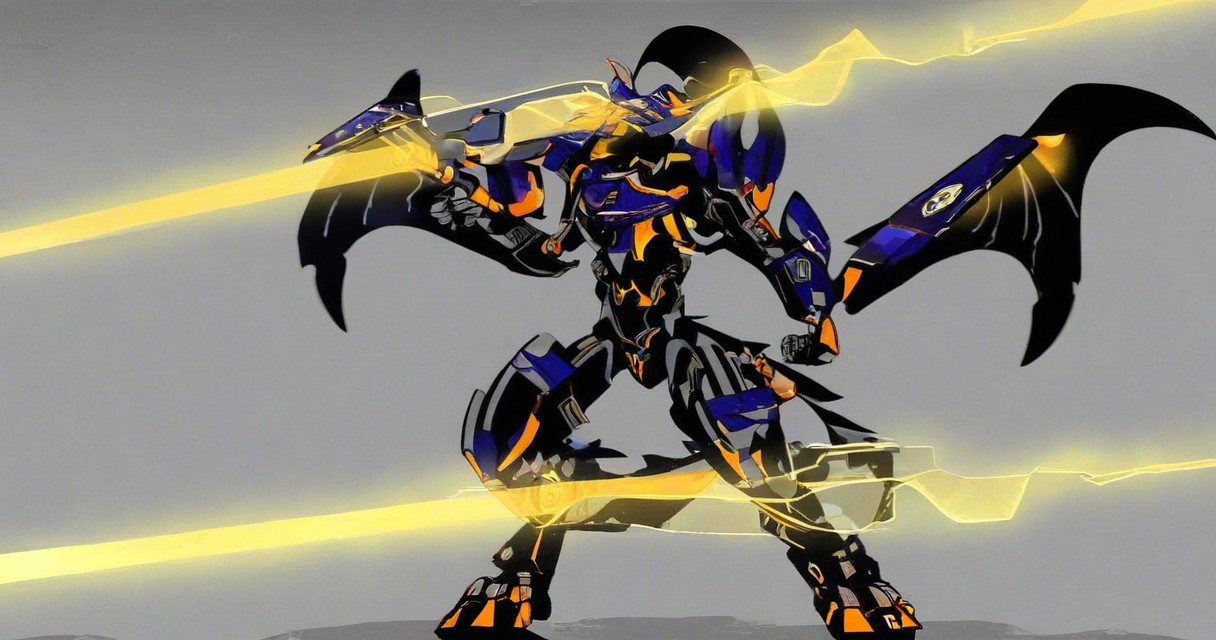
You’ve learned the heroes, you’ve warmed up in Purge, and now you want the climb. PRIME is Fracture Zone’s competitive ranked playlist, and it’s where the game’s 3v3, role-locked foundation pays off. This guide breaks down how PRIME works, how the global leaderboard scores you, and the concrete habits that move your Prime MMR up instead of sideways.

What PRIME Actually Is
PRIME is not a single repeated game loop. It’s a rotating mix of all team modes, tracked by Prime MMR. That design choice matters: you can’t climb by memorizing one map-and-mode pattern and brute-forcing it. One match you’re playing Crown Carry in Crucible — secure the crown and survive the hunt. The next you’re contesting Energy Trion Capture, holding energy zones to score. Then you might drop into Purge, pure 3v3 eliminations and trades.
Because the rotation spans every team mode, real PRIME mastery is adaptability — reading what each objective rewards and shifting your tempo to match. Note that Chaos (Free-for-All) sits outside the ranked rotation; PRIME is strictly team modes, all 3v3 with locked roles.
How the Leaderboard Scores You
Fracture Zone runs a public global leaderboard, and it doesn’t rank on a single number. Players are ranked across Eliminations, Wins, KDA, Damage, Win Rate, Accuracy, and Prime (MMR). The full table shows: Player, Level, Matches, Eliminations, Deaths, KDA, Win Rate, Accuracy, and Prime MMR.
The takeaway for climbers: Win Rate and Prime MMR are the columns that reward the team-first play PRIME is built around, while Eliminations, KDA, Damage, and Accuracy reward individual execution. Chasing kills at the expense of the objective can pad one column while sinking the one that actually reflects the climb. If you want to top the board broadly, you need both — clean mechanics and wins.
- Win Rate / Prime MMR — your record of converting fights into objectives and games.
- KDA / Deaths — discipline; staying alive keeps your team’s numbers up in 3v3 where one death is a third of the roster.
- Accuracy / Damage / Eliminations — raw output, most visible in Purge and skirmish-heavy rounds.
Role Discipline Wins Ranked
PRIME is role-locked: every team fields Damage, Control, and Support. That structure is the whole point — it removes the “everyone picks Damage” collapse and makes each match about execution. Climbing means actually playing your role’s job, not just your favorite hero.
- Damage — “End fights.” Convert openings into picks. Kyrr’s pattern is textbook: cut angles, isolate with IR threat isolation, then collapse with dash-jet burst. Shardjaw plays the other way — scent-track an isolated target through walls, shred with Acid Spray, then molt away before the trade returns.
- Control — “Own space.” Shape the fight before it starts. Ashfall breaches lines and turns chokes into a furnace with molten zone pressure; KnotHulk anchors with a Harpoon Hand pull into the grinder and seeds spore pods to deny ground.
- Support — “Keep the team online.” Eloya stays mobile, threading heals and protective overshields to reset fights; Lumenwing marks the wounded, blooms AoE chime restoration, and even her Wyrm Pistol heals allies on hit.
In ranked, the most common MMR leak isn’t bad aim — it’s a role abandoning its job. A Support that overpeeks, a Control that won’t hold the choke, a Damage that trades 1-for-1 instead of waiting for the pick: each turns a winnable 3v3 into a coin flip.
Tuning Your Global Skills for the Climb
Global skills apply across the whole game and scale per level — and your investment should follow what wins ranked fights. Survivability and consistency compound over a long climb:
| Skill | Base | Scaling |
|---|---|---|
| Resilience | — | +15 HP per level |
| Shield HP | 500 | +20 HP per level |
| Aim | Strength = 5 | +10% per level |
| Speed | — | +10% per level |
| Peripherals | 15° | +10% per level |
| Damage | — | +10% per level |
| Heal/Buff | — | +2 distance per level |
| Melee Arc | 80° | +10° per level |
Resilience (+15 HP/level) and Shield HP (+20/level off a 500 base) directly cut the deaths that wreck your KDA and hand the enemy the objective. Peripherals (+10%/level off 15°) widens your awareness — invaluable in readable 3v3 fights where tracking every threat and cooldown without a second monitor is realistic. Supports should value Heal/Buff distance (+2/level) to keep reach over a moving frontline, while Damage players lean on Aim and Speed to win the duels their role exists to win.
Mode-by-Mode Ranked Habits
Crown Carry (Crucible): the carrier becomes the whole game. Don’t sprint the crown into a 1v3 — let Control deny angles and Support overshield the carry. Patience survives the hunt; greed feeds it.
Energy Trion Capture (Crucible): this is a tempo war. Win the fight first, then take the zone — capturing into an unbroken enemy team just trades your positioning away. Control’s zone tools and Support’s resets decide who holds.
Purge (Team Deathmatch): straight 3v3 trades, so target focus is everything. Collapse on the same target together; a clean 3-on-1 in PRIME is a free fight, and a sloppy spread of damage across three enemies is a lost one. Purge is also your best lab for learning new hero kits before they show up in a ranked rotation.
The Climb in One Sentence
PRIME rewards the player who plays their role with intent, stays alive in fights small enough for every death to matter, and adapts to whatever team mode the rotation serves up. Win Rate and Prime MMR are the columns that remember that — so play the objective, trade smart, and let the leaderboard catch up. Fracture Zone is free-to-play on the Google Play Store and Apple App Store, on US servers at launch; the climb starts the moment you queue.
Leave a Reply
You must be logged in to post a comment.